
Crash protection bollards
Crash protection bollards: selection, fixing and protective effect
Guides
Crash protection bollards: selection, fixing and protective effect
Whether gate, machine, rack, charging station or traffic route: a crash protection bollard must match the expected load and the substrate. This guide helps distinguish visual demarcation, operational impact protection and special access control.
Request impact protection for your application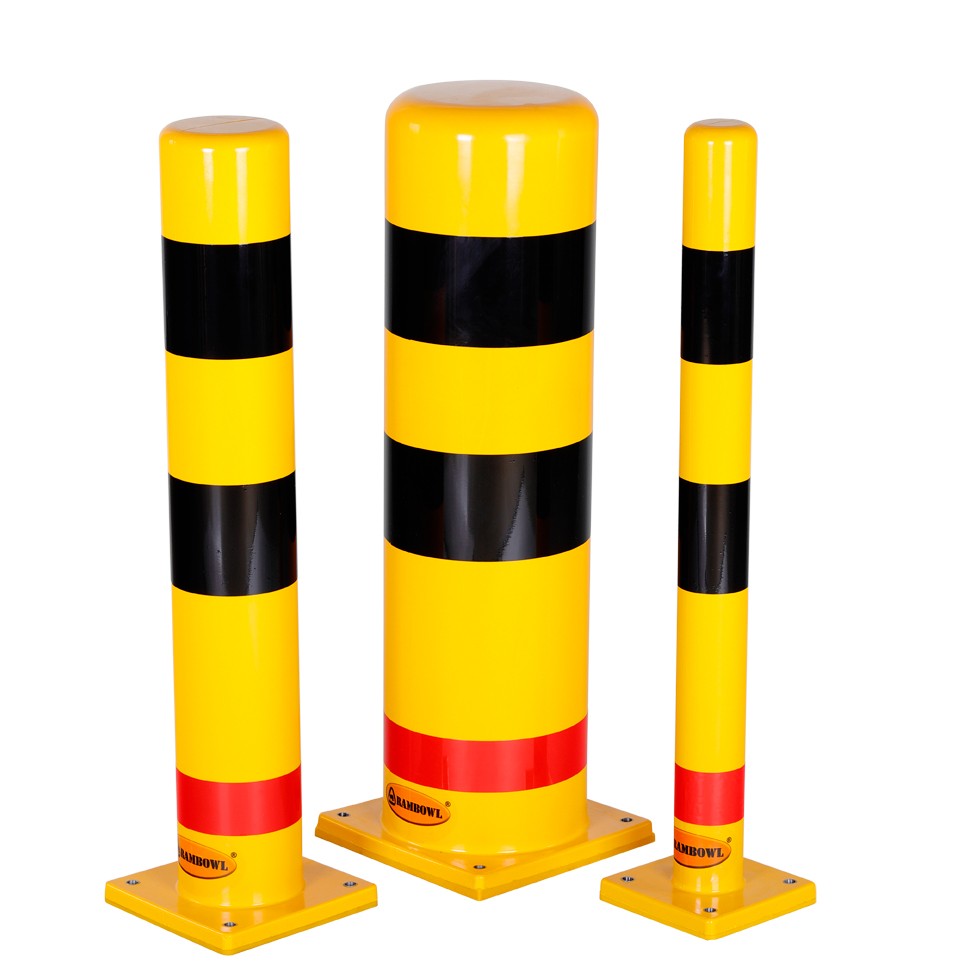
What do crash protection bollards do?
Bollards protect vulnerable equipment against unintended vehicle contact and demarcate traffic areas. The protective effect results from the whole system: bollard, fixing, substrate and tested load. Not every barrier post is a load-bearing impact protection – and an industrial bollard is no protection against deliberate vehicle attacks.
Which types are available?
| Version | Typical use | What to consider |
|---|---|---|
| Rigid steel bollard | Gates, plant, building corners | Forces on anchors and floor |
| Flexible impact protection (polymer) | Halls with forklift traffic, rack protection | Energy absorption, deflection, manufacturer evidence |
| Removable or folding bollard | Access with occasional passage | Operation, locking, protective effect |
| Mobile system | Temporary demarcation | System function and set-up rules |
| High-security system | Access protection with vehicle restraint | Test report and site-specific design |
Which load must be considered?
State vehicle type (e.g. forklift, truck), mass, speed, approach direction, impact height and the equipment to be protected. The available space behind the bollard also matters. Statements like "withstands normal speed" are no design basis – the documented performance data of the product are decisive.
How are bollards fixed?
Depending on the product with base plate and heavy-duty anchors, set in concrete or as a defined set-up configuration. Floor build-up, concrete thickness, edge distances and buried services determine the fixing. Fixings and foundation must follow the manufacturer's instructions.
Plan clearances and passages
- Record the width to be protected and possible approach routes.
- Consider the deflection of flexible systems.
- Include pedestrian routes, doors and open spaces.
- Define passages and authorised access.
- Ensure good visibility with yellow-black marking, lighting and consistent traffic routing.
What to do after an impact?
Have the bollard, anchors and substrate inspected. A bollard that looks fine may have loosened anchors or a damaged floor. Continued use or replacement depends on findings and manufacturer instructions.
Matching products
Impact Protection / Collision GuardTraffic & Guidance SystemsFloor Marking Systems
Frequently asked questions
More guides
Floor markingsWarehouse labelling
Request impact protection for your application
Send photos, a sketch, floor details, vehicle data and quantity – and describe which risk should be reduced.
This information is a general overview and does not replace applicable regulations, manufacturer instructions and your risk assessment.

Stock & Custom Solutions
Standard range from stock plus made-to-order solutions to your specifications.
Personal Expert Consultation
Direct contact with our experts – we find the technical solution for your problem.
Brand Quality
Products from renowned manufacturers – certificates and declarations of conformity per product on request.
Delivery DE & Nordics
Reliable delivery to Germany, Denmark, Norway, Sweden and Finland – Austria and Switzerland on request.